
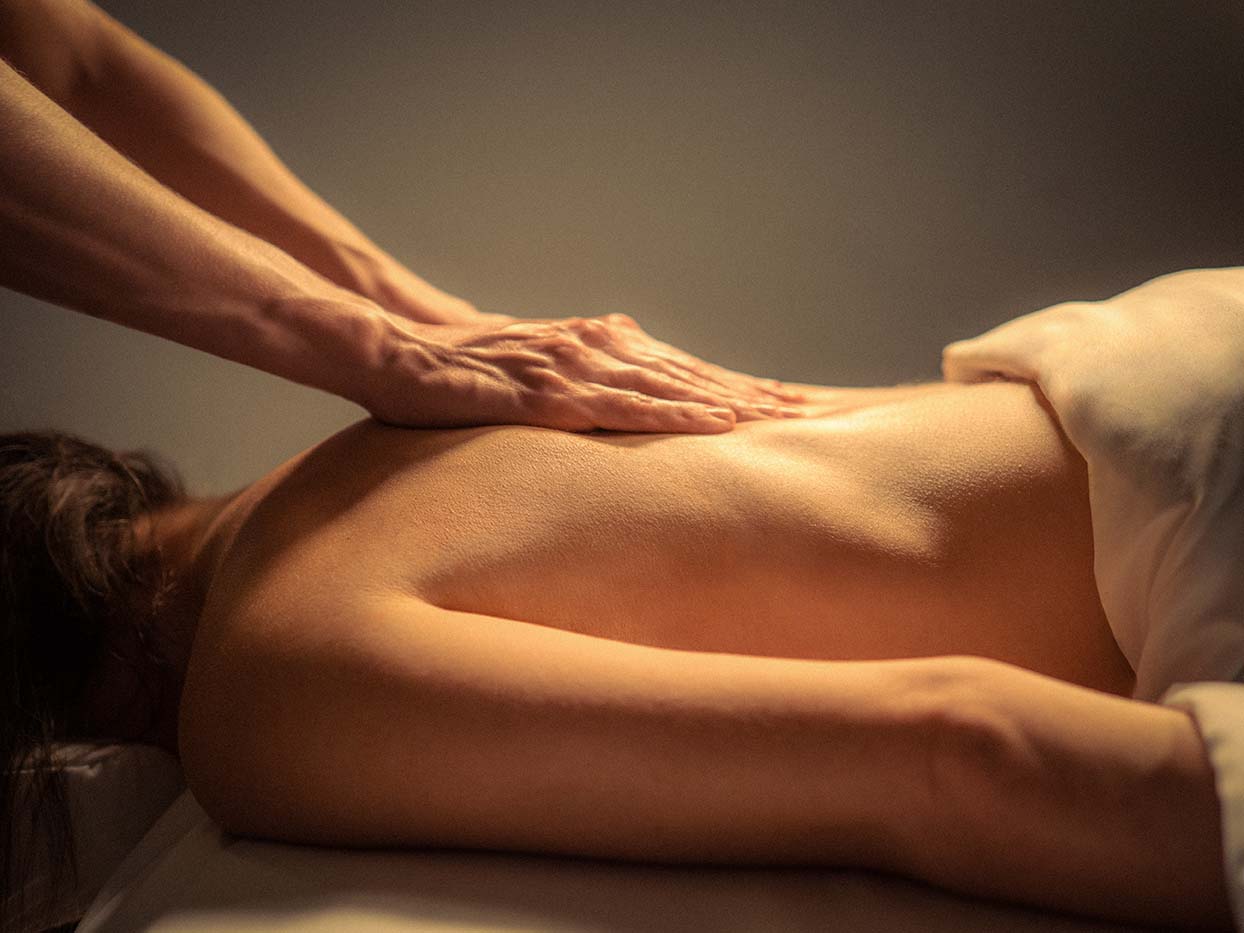
Not all massages are the same, and not all are created equal. Spend some time browsing spa menus and you'll run into a whole vocabulary of words qualifying the kind of service you're signing up for: myofascial release, trigger point, hot stone, reflexology—the list goes on.
But two of the most common terms you'll see pitted against each other are Swedish massage vs. deep tissue. What is Swedish massage vs. deep tissue massage? Are they really that different? And more importantly, which one is right for you?
What is Swedish massage?
Swedish massage is the style most people picture when they hear the word "massage," and for good reason: it's the foundation that many modalities build on. At its core, it's defined by three things:
- A focus on full-body relaxation, rather than targeted muscle work
- Features long, gliding strokes combined with kneading and rhythmic movement
- Involves light to moderate pressure throughout the session, according to the individual’s level of muscle tension or their specific massage goals
Swedish massage is practiced and recognized around the world as the standard entry point into massage therapy. It combines several techniques into one session, including gliding, kneading, and compression, to name a few. The strokes typically flow with a calming cadence, helping ease the body into a slower, more relaxed state.
Benefits of Swedish massage
The appeal of Swedish massage isn't just that it feels good, though that helps. Research has connected this style of bodywork to measurable changes in the body:
- Helps quiet a busy mind: Regular Swedish massage may help lighten everyday stress and worry, at least for a while.[1]
- Enhances relaxation: After a Swedish massage, pulse, breathing rate, and blood pressure have been shown to go down, indicating full-body relaxation.[2]
- Supports circulation: Effleurage, the long, gliding stroke at the heart of Swedish massage, may help temporarily boost blood flow to the area being massaged.[3]
- Eases mild tension: The warming, gliding motion of Swedish massage can help loosen adhesions, often felt as muscle knots, by warming the muscle tissue and surrounding fascia.[4]
Conditions it’s best suited for
Swedish massage isn't built to fix one specific problem. It's designed to help the body reset, which makes it a good match for a handful of common, everyday complaints:
- General stress and fatigue: Massage has been linked to lower levels of stress hormones like adrenocorticotropic hormone (ACTH), and research has also pointed to positive effects for people with chronic fatigue syndrome.[5] [6]
- Sleep support: Several controlled studies have found that massage recipients fall asleep more easily and stay asleep longer than those who don't receive it.[7]
- Mild muscular tightness: The same gliding, warming strokes that make Swedish massage relaxing also help loosen adhesions, the tight spots or "knots" that form in muscle and the surrounding fascia.5
- A beginner’s massage: Because the pressure stays light to moderate, it's a low-barrier way to figure out how your body responds to bodywork before working up to something more targeted, like deep tissue.
What is deep tissue massage?
If Swedish massage is a general, full-body reset, deep tissue massage is the modality you might choose when you’re looking for targeted, specific work. It's built around three things:
- A focus on the deeper layers of muscle and connective tissue, not just the surface
- Slow, focused strokes with sustained pressure, often working directly into trigger points, deep postural muscles, and muscle attachments
- A goal of easing specific or persistent tension, working out stubborn stiffness, and restoring mobility and relief, rather than full-body relaxation
When you compare deep tissue massage vs. Swedish massage, you’ll notice they have some techniques in common. The difference between Swedish and deep tissue massage is the intent. Deep tissue will still use flowing and warming strokes to relax the surface layers, then follow with slow, firm, targeted pressure to reach the deeper layers of muscle, tendon, and fascia.
Tip: While you may see “firm pressure” and “deep tissue” massage used interchangeably, they're not quite the same. Firm pressure just means you prefer more force applied during a massage, no matter what kind. Deep tissue massage specifically targets the deeper muscle layers and fascia with slower, more concentrated techniques, so while it usually involves firmer pressure, the technique and intent go beyond just "pressing harder."
Benefits of deep tissue massage
Because deep tissue massage works at a slower pace and a deeper level, its effects tend to be more targeted. Here's what the research shows:
- Works out tension and knots: Deep tissue massage has been shown to reduce the number of active trigger points and ease the muscle tightness behind them.[8]
- Improves range of motion: Along with helping ease pain, deep tissue massage has been linked to measurable gains in flexibility and joint range of motion.[9]
- Supports recovery from overuse or strain: In a study tracking athletes over regular deep tissue sessions, participants showed improved recovery outcomes, especially with consistent, bi-weekly treatment.[10]
- Can support athletic training: The same research found massage could help influence performance gains, particularly by supporting muscle strength and flexibility in areas like the shoulders, knees, and lower back.10
Because deep tissue massage works deeper into the muscle, it may induce a bit of soreness afterward, similar to how you might feel after a good workout. A little aftercare can go a long way in helping your body make the most of your session.
Conditions it’s best suited for
Deep tissue massage tends to be the right call when there's a specific issue to work through, not just a general need to unwind. It's a strong fit for:
- Neck or back pain: Deep tissue massage targeting lumbar tender points has been shown to help reduce pain and muscle hardness in people with low back pain.[11] Therapeutic massage more broadly has also shown benefit for neck pain.[12]
- Persistent muscle knots: Sustained pressure on trigger points can help improve local blood flow and interrupt the pain signals that keep a knot feeling tender.[13]
- Postural tension: Massage has been shown to have a measurable, lasting impact on upper trapezius muscle stiffness, one of the muscle groups most associated with postural strain from things like desk work or phone use.[14]
- Pre/post-activity: Research on regular deep tissue massage in athletes found benefits for both recovery and performance, making it a fit for people bookending workouts or training blocks with massage.10
How to decide
Still not sure how to decide between Swedish massage vs. deep tissue? Ask yourself a few quick questions.
- Is your primary goal relaxation or relief? If you're looking to unwind and de-stress, Swedish is the natural fit. If you're looking for help working through a specific pain point or area of tension, deep tissue is built for that.
- Do you have persistent tension, or general stress? Persistent knots, tightness, or pain that keeps coming back point toward deep tissue. Stress that's more all-over and less localized can respond well to Swedish.
- Are you new to massage? Swedish is a gentler starting point, giving you a feel for massage therapy before working up to deeper pressure.
- Are you athletic or focused on post-workout recovery? Deep tissue is often the better match for muscles under regular strain from training, especially if you're managing overuse or working postural tension.
Of course, these aren't hard rules, and you don't have to figure it out alone. A massage therapist at a Massage Envy franchised location can help you decide between Swedish vs. deep tissue massage based on how you're feeling that day, and many sessions can even blend techniques from both modalities to fit what your body actually needs at the time. So, if you walk in unsure, that's a completely normal place to start. Just talk it through with your therapist before your session begins.
Book a massage that's personalized for you at Massage Envy
At the end of the day, the Swedish vs. deep tissue massage debate doesn't have to be an either-or decision, because no two massages, or people, are exactly alike. Pressure, pacing, focus areas—all of it can be adjusted in the room based on how you're feeling that day.
Tight shoulders from a desk job and tension after a long run don't call for the same treatment, and you don't have to have it all figured out before you sit down. Just talk it through with a massage therapist at a Massage Envy franchised location, and they'll help put together a personalized massage session for you.
Want to take that personalization even further? Add an enhancement to your session:
- Rapid Tension Relief: Extra, targeted attention for problem areas that need a little more focus
- Enhanced Muscle Therapy: Concentrated warming and cooling lotions are used during your massage to provide added relief and relaxation
- Hot Stone Envy®: Heated stones are incorporated into your massage for added warmth and relaxation
Ready to build a session around what your body actually needs? Find a Massage Envy franchised location near you and book an appointment today. Or become a member and get a Wellness Session included every month, making it easy to try different modalities and switch between them as your needs change.


